
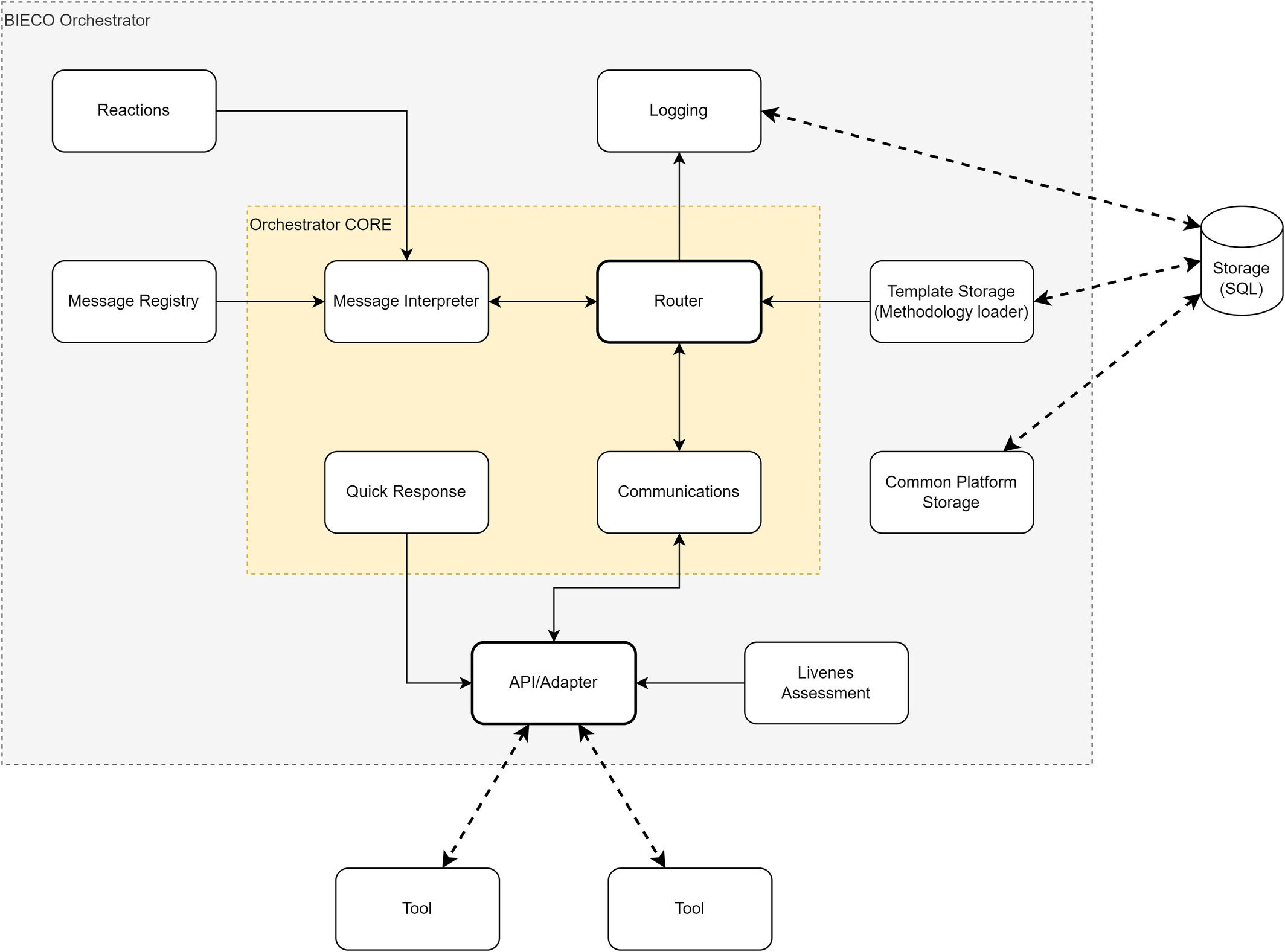
Guide in Designing an Asynchronous Performance-Centric Framework for Heterogeneous Microservices in Time-Critical Cybersecurity Applications. The BIECO Use Case
Guide in Designing an Asynchronous Performance-Centric Framework for Heterogeneous Microservices in Time-Critical Cybersecurity Applications. The BIECO Use Case
Daniela Delinschi, Rudolf Erdei, Emil Pasca, Iulia Baraian, Oliviu Matei
Abstract. This article presents the architecture, design and validation of a microservice orchestration approach that improves the flexibility of heterogeneous microservice-based platforms. Improving user experience and interaction for time-critical applications are aspects that were primary objectives for the design of the architecture. Each microservice can provide its own embedded user interface component, also decentralising it and, in consequence, improving the loosely coupled approach to the architecture. Obtained results are promising, with high throughput and low response times. Also, a key finding was the introduction of benchmarking as a new step in the development lifecycle of performance-critical software components, with an example of how it can be applied within an Agile methodology. Further research is proposed to improve the results and raise the final technology readiness level of the system. Obtained results already make the approach a candidate and viable alternative to classical service composers.
Keywords: asynchronous communication, cybersecurity, distributed systems, edge computing, heterogeneous communication, heterogeneous services, loose coupling, message-based communication, service orchestration
📋 Cite this publication
Daniela Delinschi, Rudolf Erdei, Emil Pasca, Iulia Baraian, Oliviu Matei, "Guide in Designing an Asynchronous Performance-Centric Framework for Heterogeneous Microservices in Time-Critical Cybersecurity Applications. The BIECO Use Case", , 2023.

Design of a collaborative network for mapping digital skills for Industry 5.0
Design of a collaborative network for mapping digital skills for Industry 5.0Maria Gustavsson,...
Solving the clustered minimum routing tree problem using Prüfer-coding based hybrid genetic algorithms
Solving the clustered minimum routing tree problem using Prüfer-coding based hybrid genetic...
Augmenting API Security Testing with Automated LLM-Driven Test Generation
Augmenting API Security Testing with Automated LLM-Driven Test GenerationEmil Marian Pasca, Rudolf...
Data Quality Assessment Methodology
Data Quality Assessment MethodologyDaniela Delinschi, Rudolf Erdei, Emil Pasca, Oliviu Matei...
Privacy Assessment Methodology for Machine Learning Models and Data Sources
Privacy Assessment Methodology for Machine Learning Models and Data SourcesRudolf Erdei, Emil...
Aggregation Strategy for Federated Machine Learning Algorithm
Aggregation Strategy for Federated Machine Learning AlgorithmRudolf Erdei, Daniela Delinschi,...
Using Markov chains for determining the proximity contagion of smart specialization of localities
Using Markov chains for determining the proximity contagion of smart specialization of...
Advancements in Machine Learning Algorithms for Precision Crop Yield Prediction: A Comprehensive Review with focus on European Union
Advancements in Machine Learning Algorithms for Precision Crop Yield Prediction: A Comprehensive...
TPC Net: An Efficient CNN Architecture for Tomato Plant Disease and Pest Classification
TPC Net: An Efficient CNN Architecture for Tomato Plant Disease and Pest ClassificationOvidiu...
Enhancing API Security Testing against BOLA and Authentication Vulnerabilities through an LLM-Enhanced Framework
Enhancing API Security Testing against BOLA and Authentication Vulnerabilities through an...
A new vision of social behavior on genetic algorithm performance
A new vision of social behavior on genetic algorithm performanceAndreea Tatar, Nicolae Fat, Adrian...
A comparative study of different genetic algorithms approaches to capacitated vehicle routing problem for collection of agricultural products
A comparative study of different genetic algorithms approaches to capacitated vehicle routing...

0 Comments