
An Enhanced Hybrid Machine Learning Model for Plant Disease Detection and Classification
An Enhanced Hybrid Machine Learning Model for Plant Disease Detection and Classification
Mara Măcelaru, Petrică C. Pop, Rareș Chiuzbăian, Norbert Kovacs
Abstract. Timely and precise detection of plant diseases plays a crucial role in ensuring good agricultural productivity and food security. Conventional methods of disease detection frequently depend on manual inspection, which may be time-consuming and susceptible to errors. In our paper, we develop an enhanced hybrid machine learning (ML) based model that combines Bayesian Convolutional Neural Networks (B-CNNs) for feature extraction with Gaussian Naïve Bayes (GNB) classification for final decision-making. In addition, we performed various data augmentation methods to strengthen the diversity of the training data and to improve its generalization. Our proposed hybrid ML-based model was trained and validated on the PlantVillage dataset. The performance metrics obtained were impressive, proving that it is highly competitive against existing state-of-the-art solution approaches and demonstrating the high potential of our hybrid ML-based model for real-world applications in smart agriculture.
Keywords: plant disease detection and classification; machine learning; hybrid machine learning; Bayesian convolutional neural networks; Gaussian naïve Bayes; data augmentation; PlantVillage
📋 Cite this publication
Mara Măcelaru, Petrică C. Pop, Rareș Chiuzbăian, Norbert Kovacs, "An Enhanced Hybrid Machine Learning Model for Plant Disease Detection and Classification", Proc. 20th Int. Conf. on Hybrid Artificial Intelligence Systems (HAIS 2025), Lecture Notes in Computer Science, vol. 16202, Springer, Cham, 2026, pp. 91–102, 2023. DOI: https://doi.org/10.1007/978-3-032-08465-1_8.
Reference: Proc. 20th Int. Conf. on Hybrid Artificial Intelligence Systems (HAIS 2025), Lecture Notes in Computer Science, vol. 16202, Springer, Cham, 2026, pp. 91–102. DOI: 10.1007/978-3-032-08465-1_8
Embedding GIS in crop field bonitation computation
Embedding GIS in crop field bonitation computationBogdan Văduva, Oliviu Matei, Anca Avram, Laura...
A comparative study of machine learning models for plant disease identification
A comparative study of machine learning models for plant disease identificationMăcelaru Mara,...
A Novel CNN Approach for Accurate Tomato Disease Classification
A Novel CNN Approach for Accurate Tomato Disease ClassificationOvidiu Cosma, Laura Cosma Abstract....
Design of a collaborative network for mapping digital skills for Industry 5.0
Design of a collaborative network for mapping digital skills for Industry 5.0Maria Gustavsson,...
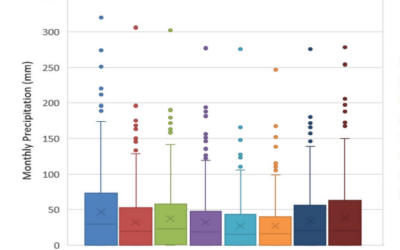
Evaluation of Feature Selection Methods in Estimation of Precipitation Based on Deep Learning Artificial Neural Networks
Precipitation is the most important element of the water cycle and an indispensable element of water resources management. This paper aims to model the monthly precipitation in 8 precipitation observation stations. The effects and role of different feature weights pre-processing methods (Weight by deviation, Weight by PCA, Weight by correlation, and Weight by Support Vector Machine) on artificial intelligence modeling were investigated.
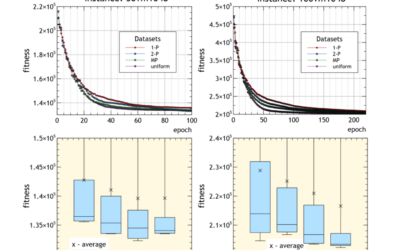
A Comparison of different crossover operators in genetic algorithms for clusters shortest-path tree problem
The clustered shortest-path tree (CluSPT) problem is an extension of the classical shortest path problem, given a graph with the nodes partitioned into several mutually exclusive and collectively exhaustive clusters looks for a shortest-path spanning tree from a predefined source node to all the other nodes of the graph, with the property that every cluster should generate a connected subgraph.
A comprehensive survey on the generalized traveling salesman problem
The generalized traveling salesman problem (GTSP) is an extension of the classical traveling salesman
problem (TSP), and it is among the most researched combinatorial optimization problems due to its theoretical properties, complexity aspects, and real-life applications in various areas: location-routing problems, material flow design problem, distribution of medical supplies, urban waste collection management, airport selection and routing the courier airplanes, image retrieval and ranking, digital garment manufacturing, etc.
A hybrid based genetic algorithm for solving the clustered generalized traveling salesman problem
We study the clustered generalized traveling salesman problem (CGTSP), which is an extension of the generalized traveling salesman problem (GTSP), which in turn generalizes the well-known traveling salesman problem (TSP).

0 Comments