
LLM-Driven, Self-Improving Framework for Security Test Automation: Leveraging Karate DSL for Augmented API Resilience
LLM-Driven, Self-Improving Framework for Security Test Automation: Leveraging Karate DSL for Augmented API Resilience
Emil Marian Pasca, Daniela Delinschi, Rudolf Erdei, Oliviu Matei
Abstract. This paper introduces Karate-BOLA-Guard, an LLM-driven, self-improving framework for security test automation that leverages the Karate DSL to enhance API resilience. The framework combines Large Language Models with Retrieval-Augmented Generation (RAG) techniques to automatically synthesize security-focused test cases, with particular emphasis on Broken Object Level Authorization (BOLA) and related authorization issues. A feedback loop allows the system to refine the generated tests based on past execution results, vulnerability reports and updated API specifications. Experimental results on representative APIs demonstrate that the framework substantially increases security test coverage and detection rates while reducing manual effort, contributing to more resilient and continuously protected APIs.
Keywords: API security; LLM; Karate DSL; BOLA; self-improving frameworks; security test automation
📋 Cite this publication
Emil Marian Pasca, Daniela Delinschi, Rudolf Erdei, Oliviu Matei, "LLM-Driven, Self-Improving Framework for Security Test Automation: Leveraging Karate DSL for Augmented API Resilience", IEEE Access, vol. 13, 2025, 2023. DOI: https://doi.org/10.1109/ACCESS.2025.3554960.
Reference: IEEE Access, vol. 13, 2025. DOI: 10.1109/ACCESS.2025.3554960
Solving the clustered minimum routing tree problem using Prüfer-coding based hybrid genetic algorithms
Solving the clustered minimum routing tree problem using Prüfer-coding based hybrid genetic...

Augmenting API Security Testing with Automated LLM-Driven Test Generation
Augmenting API Security Testing with Automated LLM-Driven Test GenerationEmil Marian Pasca, Rudolf...

Data Quality Assessment Methodology
Data Quality Assessment MethodologyDaniela Delinschi, Rudolf Erdei, Emil Pasca, Oliviu Matei...

Privacy Assessment Methodology for Machine Learning Models and Data Sources
Privacy Assessment Methodology for Machine Learning Models and Data SourcesRudolf Erdei, Emil...
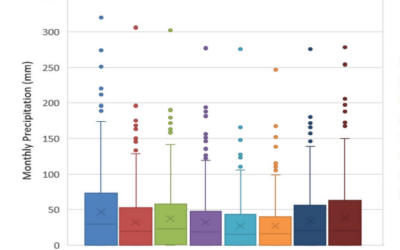
Evaluation of Feature Selection Methods in Estimation of Precipitation Based on Deep Learning Artificial Neural Networks
Precipitation is the most important element of the water cycle and an indispensable element of water resources management. This paper aims to model the monthly precipitation in 8 precipitation observation stations. The effects and role of different feature weights pre-processing methods (Weight by deviation, Weight by PCA, Weight by correlation, and Weight by Support Vector Machine) on artificial intelligence modeling were investigated.
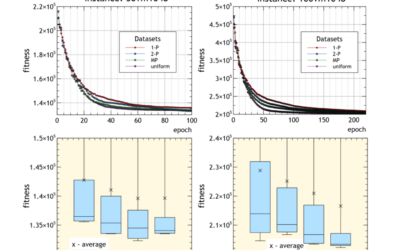
A Comparison of different crossover operators in genetic algorithms for clusters shortest-path tree problem
The clustered shortest-path tree (CluSPT) problem is an extension of the classical shortest path problem, given a graph with the nodes partitioned into several mutually exclusive and collectively exhaustive clusters looks for a shortest-path spanning tree from a predefined source node to all the other nodes of the graph, with the property that every cluster should generate a connected subgraph.

A comprehensive survey on the generalized traveling salesman problem
The generalized traveling salesman problem (GTSP) is an extension of the classical traveling salesman
problem (TSP), and it is among the most researched combinatorial optimization problems due to its theoretical properties, complexity aspects, and real-life applications in various areas: location-routing problems, material flow design problem, distribution of medical supplies, urban waste collection management, airport selection and routing the courier airplanes, image retrieval and ranking, digital garment manufacturing, etc.
A hybrid based genetic algorithm for solving the clustered generalized traveling salesman problem
We study the clustered generalized traveling salesman problem (CGTSP), which is an extension of the generalized traveling salesman problem (GTSP), which in turn generalizes the well-known traveling salesman problem (TSP).

0 Comments