
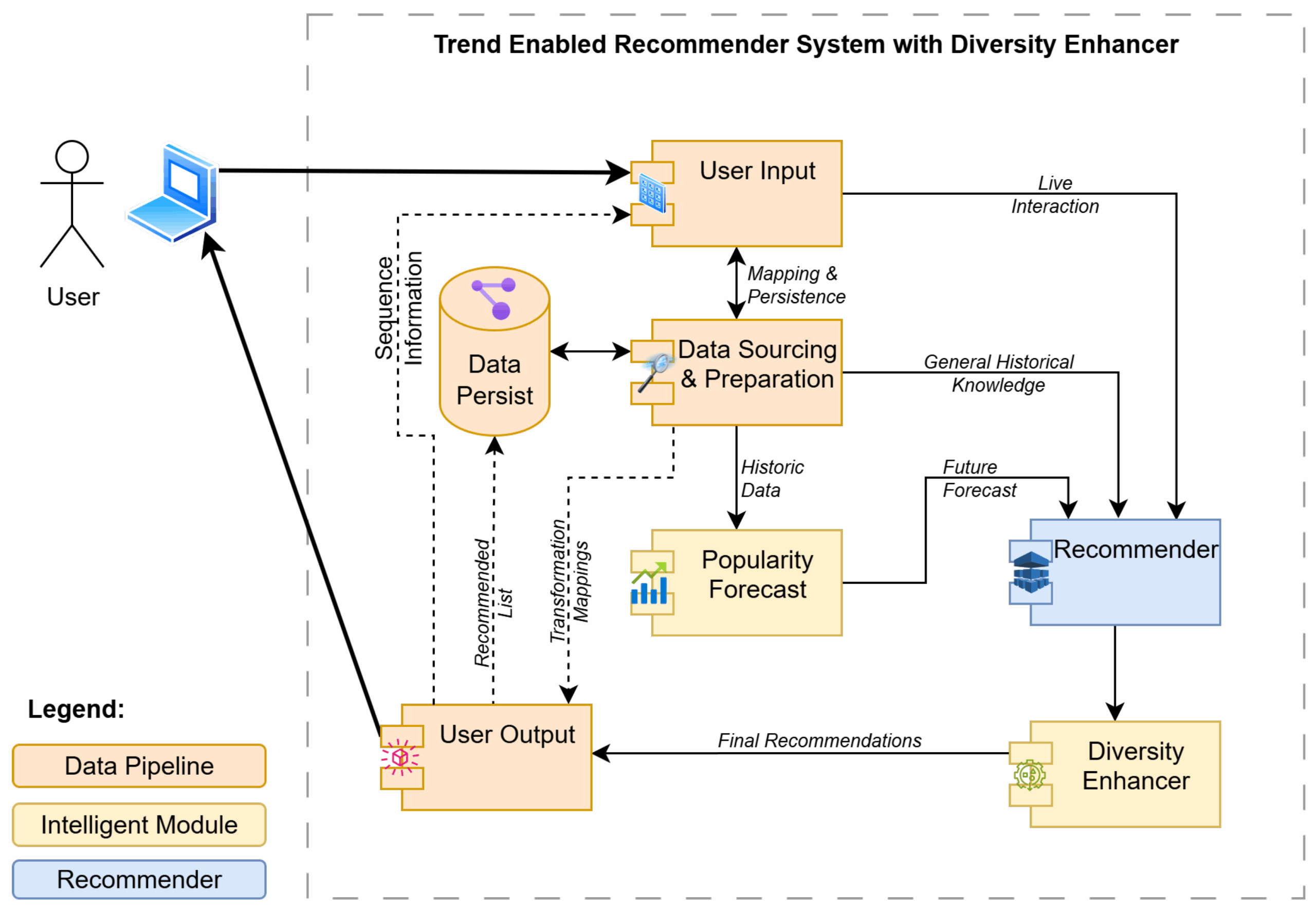
Trend-Enabled Recommender System with Diversity Enhancer for Crop Recommendation
Trend-Enabled Recommender System with Diversity Enhancer for Crop Recommendation
Iulia Baraian, Rudolf Erdei, Rares Tamaian, Daniela Delinschi, Emil Pasca, Oliviu Matei
Abstract. Achieving optimal agricultural yields and promoting sustainable farming relies on accurate crop recommendations. However, the applicability of many current systems is limited by their considerable computational requirements and dependence on comprehensive datasets, especially in resource-limited contexts. This paper presents HOLISTIQ RS, a novel crop recommendation system explicitly designed for operation on low-specification hardware and in data-scarce regions. HOLISTIQ RS combines collaborative filtering with a Markov model to predict appropriate crop choices, drawing upon user profiles, regional agricultural data, and past crop performance. Results indicate that HOLISTIQ RS provides a significant increase in recommendation accuracy, achieving a MAP@5 of 0.31 and nDCG@5 of 0.41, outperforming standard collaborative filtering methods (the KNN achieved MAP@5 of 0.28 and nDCG@5 of 0.38, and the ANN achieved MAP@5 of 0.25 and nDCG@5 of 0.35). Significantly, the system also demonstrates enhanced recommendation diversity, achieving an Item Variety (IV@5) of 23%, which is absent in deterministic baselines. Significantly, the system is engineered for reduced energy consumption and can be deployed on low-cost hardware. This provides a feasible and adaptable method for encouraging informed decision-making and promoting sustainable agricultural practices in areas where resources are constrained, with an emphasis on lower energy usage.
Keywords: recommender system; markov process; system architecture; recommendation diversity; cold start problem; trend forecasting
📋 Cite this publication
Iulia Baraian, Rudolf Erdei, Rares Tamaian, Daniela Delinschi, Emil Pasca, Oliviu Matei, "Trend-Enabled Recommender System with Diversity Enhancer for Crop Recommendation", , 2023.
An Enhanced Hybrid Machine Learning Model for Plant Disease Detection and Classification
An Enhanced Hybrid Machine Learning Model for Plant Disease Detection and ClassificationMara...
A GIS-Driven, Machine Learning-Enhanced Framework for Adaptive Land Bonitation
A GIS-Driven, Machine Learning-Enhanced Framework for Adaptive Land BonitationBogdan Văduva, Anca...
Competition between Dandelion and Prüfer encoded genetic algorithms for solving the clustered minimum routing tree problem
Competition between Dandelion and Prüfer encoded genetic algorithms for solving the clustered...
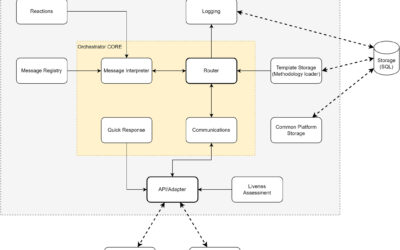
Guide in Designing an Asynchronous Performance-Centric Framework for Heterogeneous Microservices in Time-Critical Cybersecurity Applications. The BIECO Use Case
The generalized traveling salesman problem (GTSP) is an extension of the classical traveling salesman
problem (TSP), and it is among the most researched combinatorial optimization problems due to its theoretical properties, complexity aspects, and real-life applications in various areas: location-routing problems, material flow design problem, distribution of medical supplies, urban waste collection management, airport selection and routing the courier airplanes, image retrieval and ranking, digital garment manufacturing, etc.
Privacy-Conducive Data Ecosystem Architecture: By-Design Vulnerability Assessment Using Privacy Risk Expansion Factor and Privacy Exposure Index
Privacy-Conducive Data Ecosystem Architecture: By-Design Vulnerability Assessment Using Privacy...
A Vulnerable-by-Design IoT Sensor Framework for Cybersecurity in Smart Agriculture
A Vulnerable-by-Design IoT Sensor Framework for Cybersecurity in Smart AgricultureEmil Marian...
A Privacy Assessment Framework For Data Tiers In Multilayered Ecosystem Architectures
A Privacy Assessment Framework For Data Tiers In Multilayered Ecosystem ArchitecturesIonela...
LLM-Driven, Self-Improving Framework for Security Test Automation: Leveraging Karate DSL for Augmented API Resilience
LLM-Driven, Self-Improving Framework for Security Test Automation: Leveraging Karate DSL for...
Sustainability of the Integrated Waste Management System: A Case Study of Bihor County, Romania
Sustainability of the Integrated Waste Management System: A Case Study of Bihor County,...
Optimizing fertilization and crop management for triticale in the Lăpuș depression, Romania
Optimizing fertilization and crop management for triticale in the Lăpuș depression, RomaniaI....
Using Automation and Artificial Intelligence in the Management of European Social Fund Projects
Using Automation and Artificial Intelligence in the Management of European Social Fund...
Benefits and limitations of digitalization in managing European Social funded projects
Benefits and limitations of digitalization in managing European Social funded projectsMatei...

0 Comments